


Invisalign for Adults: Ideal Candidates and Braces Alternatives
Invisalign for adults can be highly effective when the case is a good fit and aligners are worn consistently. For many adults with mild to moderate crowding, spacing, or select bite issues, Invisalign can straighten teeth with a discreet look and a routine that fits work and social life. The key is a customized treatment plan, steady wear, and choosing Invisalign when it is the most predictable option for your goals.
TL;DR
- Invisalign for adults works best for mild to moderate crowding, gaps, and select bite issues.
- Invisalign is less predictable for severe bite problems, major jaw discrepancies, and some complex movements.
- Wear time matters. Invisalign only works well when aligners are worn as directed.
- Many adult timelines are around 12 to 18 months, depending on complexity and consistency.
- A consultation is the fastest way to confirm if Invisalign or braces is the better plan.
Who is Invisalign for adults best for?
Invisalign often works best for adults who want a low-visibility treatment and can stay consistent day to day. Aligners are removable, which many adults prefer for meals, brushing, flossing, and important events.
Signs you may be a strong Invisalign candidate
You are more likely to be a good fit if you:
- Want a discreet option for work, meetings, and social settings
- Prefer a removable approach for eating and oral hygiene
- Have mild to moderate crowding or spacing
- Can wear aligners consistently and follow the schedule
What matters most for adults
Adults tend to do well with Invisalign when treatment is planned carefully and the routine is realistic. Consistency is the difference between “pretty good” and “great results.”
What can Invisalign fix for adults?
Invisalign can address several common orthodontic concerns for adults, especially when the plan is designed for your specific bite and movement needs.
Common issues Invisalign can improve
- Crowding (overlapping or rotated teeth)
- Spacing (gaps between teeth)
- Relapse after prior braces or aligners
- Some bite concerns, depending on severity and treatment design
Not every bite issue is a match for aligners. The best way to confirm what Invisalign can fix for you is an exam and a customized plan.
What makes Invisalign effective for adults?
Adults researching Invisalign for adults usually want one thing: predictable results without disrupting life. These factors have the biggest impact on effectiveness.
1) A custom plan built from accurate scans
Invisalign results depend on how well the plan matches your teeth and bite. Digital scans and a detailed plan make movement more predictable.
2) Consistent daily wear
Invisalign is removable, which is a benefit and a risk. If wear time drops, teeth may not track as planned. That can lead to delays, refinements, or a switch in approach.
3) Staying on schedule with aligner changes
Most patients change aligners on a set schedule. Following that schedule keeps progress steady and reduces the chance of setbacks.
4) Refinements when needed
Some adults need small refinements near the end to fine-tune alignment. That is normal. A good plan anticipates this so the finish looks intentional, not rushed.
How long does Invisalign take for adults?
Treatment time depends on how much movement is needed and how consistently aligners are worn. Many adult Invisalign cases fall around 12 to 18 months, but shorter or longer timelines are possible.
What can change your Invisalign timeline
- Severity of crowding, spacing, and bite needs
- Wear time consistency
- How your teeth respond to movement
- Whether refinements are needed to perfect the result
If you want a realistic timeline, a consultation is the most accurate way to get it.
When should adults skip Invisalign?
Invisalign can be a great option, but it is not ideal for every case. Some adults get better results, faster and more predictably, with braces or other orthodontic approaches.
Invisalign may not be the best choice if you have:
- Severe bite problems that need comprehensive correction
- Major jaw discrepancies where orthodontics alone may not be enough
- Complex movements that need fixed control
- Difficulty committing to consistent daily wear
If any of these apply, it does not mean Invisalign is impossible. It means your orthodontist should confirm predictability before choosing it.
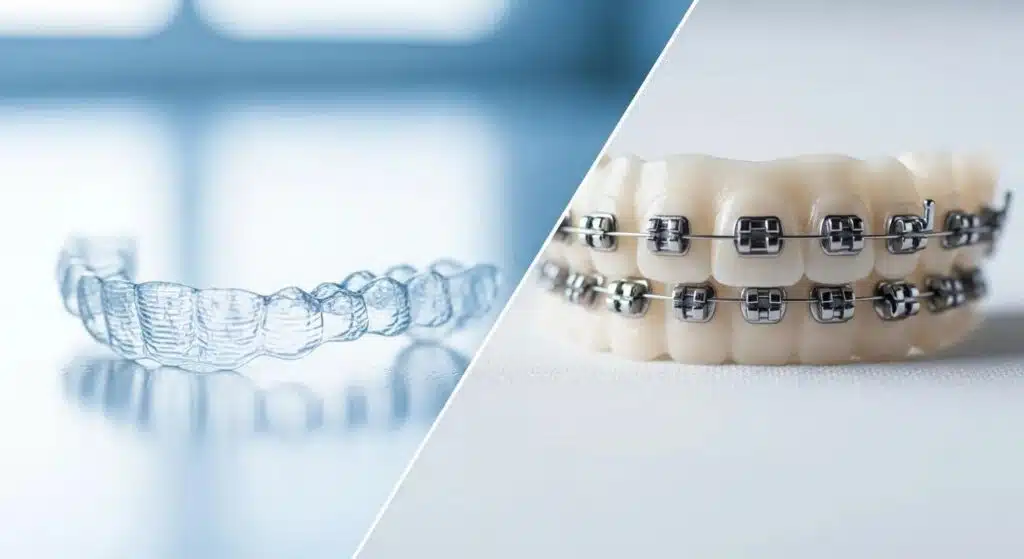
Invisalign vs braces for adults
Both Invisalign and braces can deliver excellent results. The best option is the one that matches your case and your routine.
Why adults choose Invisalign
Adults often prefer Invisalign because it offers:
- Removability for meals and oral hygiene
- A discreet appearance
- A smooth routine for many patients
When braces are the better plan
Braces can be a better choice when:
- Your case needs detailed control for bite correction
- You want a fixed system that works full-time
- You prefer not to manage aligner wear time
A consultation helps you compare both options based on predictability, not preference alone.
What is the Invisalign process for adults?
Most Invisalign treatment follows a clear sequence. Knowing the steps helps adults feel confident before starting.
Consultation and exam
You discuss goals, concerns, and what you want your smile to look like. The orthodontist evaluates your alignment and bite to confirm whether Invisalign for adults is the right fit.
Digital scans and a custom plan
A plan is built from scans and clinical goals. This maps the tooth movements and outlines your series of aligners.
Wearing aligners and progressing through trays
You wear aligners consistently and switch to the next set on schedule. Check-ins help ensure teeth are tracking and progress is on pace.
Refinements and finishing
If needed, small refinements fine-tune the final result. This is common and helps improve the finish.
Retainers after Invisalign
Retainers help keep teeth from shifting back. They are a key part of long-term stability.
FAQs about Invisalign for adults
How effective is Invisalign for adults?
Invisalign can be highly effective for adults with mild to moderate alignment issues and select bite concerns. Results are best when aligners are worn consistently and the plan is designed for your bite.
Do I have to remove Invisalign to eat?
Yes. Aligners are removed for meals and snacks, then put back in afterward. This helps protect the aligners and makes brushing and flossing easier.
How long does Invisalign take for adults?
Many adult cases are around 12 to 18 months, depending on complexity and wear time. A consultation can estimate your timeline more accurately.
Does Invisalign hurt?
You may feel pressure or mild soreness, especially when switching to a new aligner. This usually fades within a day or two and is a normal part of tooth movement.
Do adults need a retainer after Invisalign?
Yes. Retainers help maintain your results and reduce the chance of teeth shifting. Most orthodontists consider retention essential after any orthodontic treatment.
Schedule a consultation with Eagle Rock Orthodontics
If you are considering Invisalign for adults, the best next step is a consultation to confirm fit, timeline, and cost. Dr. Garen Utudjian and the team at Eagle Rock Orthodontics can help you compare Invisalign and braces and choose the option that matches your goals and your bite.
Get a personalized Invisalign plan
Book a consultation with Eagle Rock Orthodontics to review your options, see what your results can look like, and get clear pricing and an estimated timeline.